
How to Replace a Watch Battery at Home: A Step-by-Step Guide

Affiliate disclosure: Some links on this page are affiliate links. If you buy through them we earn a small commission at no extra cost to you. Recommendations are research-driven; we don't claim personal use of every product reviewed. Product prices and availability are accurate as of the date published and are subject to change. Always check Amazon for current pricing before purchasing. Learn more.
Quick Picks
Watch Batteries 80PCS - AG0, AG1, AG3, AG4, AG5, AG7, AG10, AG13, 1.5V Alkaline LR41 LR44 Assorted Button Coin Cell
Assorted pack includes eight common watch battery types
Buy on AmazonSR626SW Watch Batteries 377 376 LR626 Battery AG4 1.5v Alkaline Coin Cells (10 Count (Pack of 1))
1.5v alkaline coin cells suitable for multiple watch types
Buy on AmazonJOREST Watch Battery Replacement Kit, Watch Repair Screwdriver, Watch Band Replacement tool, Watch Wrench Back Remover,
Comprehensive kit includes battery replacement and multiple specialized tools
Buy on Amazon| Product | Price Range | Top Strength | Key Weakness | Buy |
|---|---|---|---|---|
| Watch Batteries 80PCS - AG0, AG1, AG3, AG4, AG5, AG7, AG10, AG13, 1.5V Alkaline LR41 LR44 Assorted Button Coin Cell also consider | $$ | Assorted pack includes eight common watch battery types | Unknown brand may lack established warranty or support | Buy on Amazon |
| SR626SW Watch Batteries 377 376 LR626 Battery AG4 1.5v Alkaline Coin Cells (10 Count (Pack of 1)) also consider | $$ | 1.5v alkaline coin cells suitable for multiple watch types | Unknown brand may lack established reputation in battery category | Buy on Amazon |
| JOREST Watch Battery Replacement Kit, Watch Repair Screwdriver, Watch Band Replacement tool, Watch Wrench Back Remover, also consider | $$ | Comprehensive kit includes battery replacement and multiple specialized tools | Manual tools require user skill and experience to operate safely | Buy on Amazon |
A dead battery is the most common reason a quartz watch stops, and it’s also one of the more manageable repairs a careful owner can handle at home, provided the case design cooperates. Snap-back cases are generally accessible with basic tools. Screw-back cases and anything involving water-resistance reseals are a different matter entirely.
Getting this right starts with understanding what you actually need: the correct battery chemistry, the right size, and tools that fit the job without damaging the case or movement.
What Goes Wrong Before You Even Open the Case
Most battery replacement mistakes happen before the new cell goes in. The wrong battery size, an incompatible chemistry, or a tool that slips on a case back can turn a ten-minute job into an expensive trip to a watchmaker. Knowing the failure modes ahead of time saves the case, the crystal, and your patience.
For context on the full range of tools worth having on hand, the Repair Tools & Kits hub covers what’s worth buying versus what’s likely to cause problems.
The Battery Size Problem
Button cell sizing is not standardized in a way that makes intuitive sense to most people. AG, SR, CR, and LR designations reflect different chemistries and sizing conventions, and a battery that physically fits a compartment may still be the wrong voltage or drain rate for the movement. Long-term owners of common quartz movements consistently report that using the correct SR (silver oxide) cell instead of a generic alkaline substitute extends service intervals significantly, because silver oxide cells maintain a more consistent voltage curve over their life.
The spec most worth confirming before buying any replacement battery is the exact reference number printed on the old cell or listed in your watch’s manual. Common equivalencies, like 377/SR626SW or 395/SR927SW, can be looked up, but the safest starting point is reading what came out.
The Case Back Problem
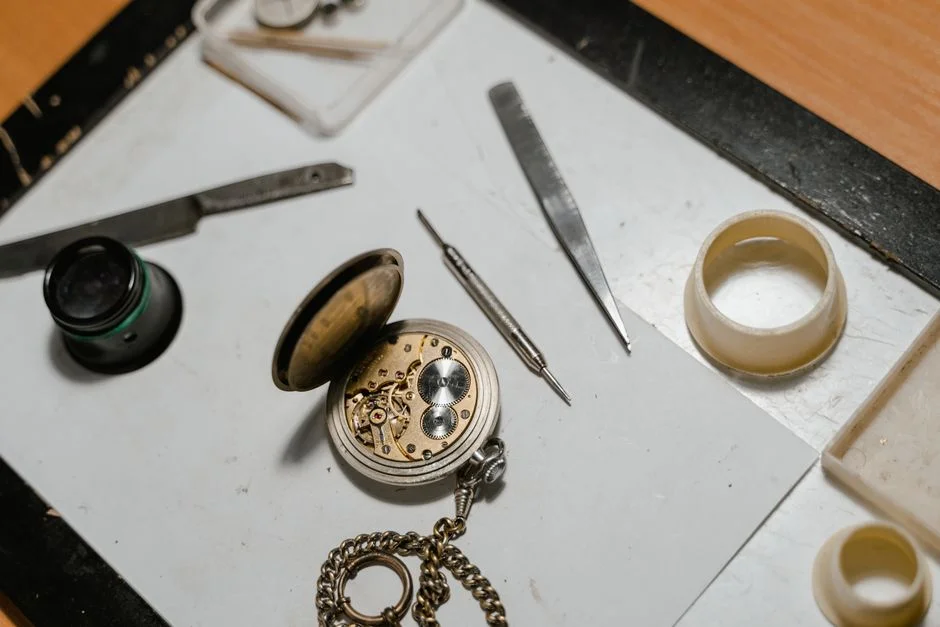
Snap-back cases open with a case-back opening tool applied to a notch on the case rim. Screw-back cases require a dedicated friction wrench or spanner wrench that grips the case back’s notches without slipping. Using a screwdriver or knife blade on either type is a reliable way to scratch the case or crack the crystal, which is exactly what happened when attempting a shortcut on a cheap quartz piece years ago. The local watchmaker confirmed the job wasn’t a good fit for improvised tools, and the crystal replacement cost more than a proper kit would have.
The rule that holds up across different collections and case types: if the case back has notches or slots for a wrench, it needs the right wrench, not a workaround.
When to Stop and Call a Professional
Water-resistant watches, divers, and any case rated above basic splash resistance should not be opened at home for a battery swap without the ability to reseal and pressure-test afterward. The gaskets that maintain water resistance are compressed during assembly, and opening the case without replacing and re-seating the gasket correctly voids whatever water protection the watch had. Long-term owner reports across dive watch communities are consistent on this: a watchmaker with a pressure testing rig is the only correct answer for anything you plan to wear in water.
Crystal replacement falls in the same category. The tools required to seat a crystal without cracking it are specialized enough that a mid-range kit won’t get the job done reliably. This is worth stating plainly, because the repair tools category can give the impression that every watch job is DIY-accessible. Most strap swaps and battery changes on snap-back cases are. Crystal work and water-resistance reseals are not.
Buying Guide: Choosing the Right Battery and Tools
Matching Battery Chemistry to Your Movement
The two chemistries you’ll encounter most often in watch batteries are alkaline (LR-prefix cells) and silver oxide (SR-prefix cells). Silver oxide cells cost more per unit but hold voltage more consistently through their discharge cycle, which translates to more accurate timekeeping until the battery is nearly depleted. Alkaline cells drop voltage more gradually, which can cause a quartz movement to run slow before it stops entirely.
Most manufacturers spec silver oxide for their quartz movements, particularly for anything with a high-drain complication like a chronograph or an alarm function. The Repair Tools & Kits hub has additional context on sourcing tools and supplies across different watch types.
Understanding AG vs. SR vs. LR Designations
AG numbers (AG0 through AG13) are a general designation used in packaging to indicate approximate size and application. They don’t specify chemistry. An AG13 might be sold as either an alkaline LR44 or a silver oxide SR44, and both will fit the same compartment. The difference shows up in runtime and voltage consistency.
SR designations specify silver oxide chemistry, and the numeric suffix corresponds to a specific IEC size standard. When a watch manual lists an SR626SW, it means silver oxide, 6.8mm diameter, 2.6mm height. Buying based on that number rather than the AG equivalent reduces guesswork. Owner reviews in watch communities frequently note that sticking to SR cells for precision movements avoids the midlife slowdown that alkaline cells can cause.
Pack Size and Practical Value
For someone maintaining a small collection of quartz pieces, a variety pack covering the most common sizes makes sense as a starting inventory. The practical limit of bulk buying is that button cells have a shelf life, typically three to five years when stored correctly, and individual sizes within an assortment may see uneven use depending on what movements are in the collection.
A targeted single-size pack is the better call once you know which cell a specific watch requires regularly. Cross-referencing the part number before ordering prevents the common situation of having twenty AG13s left over while the one watch in the collection that uses AG4 cells sits dead on the shelf.
Tool Quality and What It Actually Affects
The case-back opener is the tool that causes the most damage in amateur battery replacements. A friction wrench that doesn’t grip the case back notches cleanly will slip, and that slip typically goes into the case side or the crystal surround. Spring bar tools that are too thick scratch lug channels. Cheap sets made from soft metal deform quickly and stop functioning correctly after a few uses.
Mid-range kits from brands with documented owner feedback generally perform adequately for snap-back cases and strap swaps. They are not a substitute for professional tools on complex jobs. The distinction matters: a kit that’s right for straightforward maintenance is still the wrong tool for a screw-back diver’s case.
Storage and Shelf Life Considerations
Loose button cells left in a drawer tend to short-circuit against each other or against metal tools, which drains them before they’re installed in a watch. Storing them in their original packaging or in a labeled compartment case extends usable shelf life. Some long-term owners report batteries purchased in bulk lasting beyond the printed expiry date when stored cool and dry, but the manufacturer’s stated shelf life is the more reliable planning benchmark.
Keeping a written record of which battery size corresponds to each watch in the collection eliminates the trial-and-error that wastes cells from a bulk pack.
Top Picks
Watch Batteries 80PCS Assorted Button Coin Cell
The Watch Batteries 80PCS - AG0, AG1, AG3, AG4, AG5, AG7, AG10, AG13, 1.5V Alkaline LR41 LR44 Assorted Button Coin Cell covers eight of the most commonly encountered watch battery sizes in a single purchase. For a collection with varied quartz movements that use different cell sizes, this kind of assortment eliminates the need to order individual sizes for each watch.
The alkaline chemistry across the pack is worth noting. Silver oxide cells are generally preferred for precision movements, but for basic quartz watches where runtime consistency matters less than price per cell, alkaline chemistry is a practical choice. Specs confirm 1.5V nominal voltage across all included sizes, which is compatible with the majority of analog quartz movements on the market.
The tradeoff with an unknown-brand bulk assortment is the absence of an established manufacturer warranty or quality track record to reference. Owner reviews suggest the cells perform adequately for standard quartz applications, but buyers who own higher-grade timepieces may prefer sourcing named-brand silver oxide cells for those specific watches while using this pack for lower-stakes repairs.
Check current price on Amazon.
SR626SW Watch Batteries 377 376 LR626 Battery AG4
The SR626SW Watch Batteries 377 376 LR626 Battery AG4 1.5v Alkaline Coin Cells addresses one of the more commonly needed watch battery sizes in a focused ten-count pack. The SR626SW is the silver oxide designation, while 377 and 376 are the common trade numbers for the same size, and LR626 is the alkaline equivalent. Having all three reference numbers on the packaging helps confirm compatibility across different watch brands that label their battery requirements differently.
Ten cells provides a reasonable supply for a single watch that needs periodic battery replacement, or a small set of watches using the same size. The alkaline chemistry note on this pack is worth attention: some listings use the SR626SW designation but supply alkaline chemistry, which matters for movements that spec silver oxide. Verified buyer notes suggest confirming the chemistry on the actual product page before purchasing if that distinction affects the watches in your collection.
The convenience of a single-size pack is that nothing goes to waste. Unlike an assortment where certain sizes may sit unused, a targeted ten-count is sized appropriately for actual usage patterns in most small collections.
Check current price on Amazon.
Jorest Watch Battery Replacement Kit
The JOREST Watch Battery Replacement Kit, Watch Repair Screwdriver, Watch Band Replacement tool, Watch Wrench Back Remover brings together the tools needed for battery replacement and strap swaps in one mid-range purchase. The inclusion of a case back wrench is the meaningful differentiator from basic kits that only cover snap-back removal. Having a friction wrench that actually engages the notches on a screw-back case reduces the risk of slipping and scratching, which is the failure mode that causes real damage.
The screwdrivers and spring bar tools in the kit cover the strap replacement side of maintenance. Owner reports generally indicate the tools are adequate for the repair scope the kit is designed to handle: battery changes on accessible cases and strap swaps. The caveat that applies to any mid-range kit applies here too, that manual tools require some patience to use correctly, and the first attempt on an unfamiliar case should be approached slowly rather than with force.
What this kit does not do is make crystal replacement or water-resistance resealing accessible. That’s not a knock specific to this product. It’s the honest boundary of what any consumer-grade kit can responsibly handle. For snap-back battery swaps and strap changes, the consensus among owners is that this kit covers the job adequately.
Check current price on Amazon.
Closing Thoughts
Watch battery replacement is a manageable home repair for most quartz watches with snap-back cases. It requires the right battery size, confirmed against the reference number on the old cell or the watch manual, and a case-back tool that fits the specific case design. Getting both of those right covers the majority of straightforward battery jobs without risking the case or the movement.
For anything beyond that, including screw-back cases on watches you’re less familiar with, water-resistant watches, or any repair that touches the crystal or gasket, a professional watchmaker is the right call. The full range of tools and supplies for home watch maintenance is covered in the watch repair tools and kits section, including options for different skill levels and collection types.
Frequently Asked Questions
How do I find the right replacement battery size for my watch?
The most reliable method is reading the reference number printed on the battery that came out of the watch. Most cells have the model number printed or embossed on one face. If the number has worn off, the watch manual usually lists the correct cell specification. Cross-reference charts that map AG, SR, and LR numbers can help confirm compatibility, but starting from the original reference number eliminates most sizing errors.
What is the difference between SR and LR watch batteries?
SR designates silver oxide chemistry, and LR designates alkaline chemistry. Both use the same nominal 1.5V rating, but silver oxide cells maintain a more consistent voltage through most of their discharge cycle, which helps quartz movements keep accurate time until the battery is nearly depleted. Alkaline cells drop voltage more gradually and can cause a movement to run slow before stopping. Most watch manufacturers specify silver oxide for precision movements, particularly those with complications like chronographs.
Can I replace a watch battery at home if the case is screw-back?
Technically yes, but it requires a friction wrench or spanner wrench that properly engages the case back notches. Attempting a screw-back removal with a screwdriver blade or improvised tool reliably results in slipped tools and scratched cases. If the watch has a water-resistance rating above basic splash resistance, the gasket should also be replaced and the case pressure-tested after reassembly, which is a job for a professional watchmaker with the right equipment. For water-resistant watches you plan to wear near water, a watchmaker is the safer choice regardless of case type.
How long do watch batteries typically last?
Most standard quartz movements run one to three years on a single cell, depending on the movement type, complications, and battery chemistry. High-drain complications like backlights, alarms, or chronograph functions can significantly shorten battery life. Silver oxide cells generally outlast alkaline equivalents in the same movement because of their more stable voltage curve. Manufacturer specs for specific movements usually include a stated battery life estimate, and long-term owner reviews often provide a realistic comparison against that stated figure.
Is it worth buying a battery assortment pack or individual sizes?
An assortment makes sense for someone maintaining several quartz watches with different movement sizes, because it covers most common cells without multiple separate orders. The drawback is that certain sizes in the assortment may go unused, and button cells have a shelf life of roughly three to five years. For someone who regularly replaces the same size battery in one or two watches, a targeted single-size pack reduces waste and is easier to track. Knowing the exact reference number for each watch in the collection makes either purchasing approach more efficient.
Where to Buy
Watch Batteries 80PCS - AG0, AG1, AG3, AG4, AG5, AG7, AG10, AG13, 1.5V Alkaline LR41 LR44 Assorted Button Coin CellSee Watch Batteries 80PCS - AG0, AG1, AG3… on Amazon